ChatGPT Teams vs. Claude Team vs. Self-Hosted: What Actually Changes at 50 Seats
July 29, 2026 (3m ago)
Fifty seats is an awkward number. Too big to run on somebody's personal ChatGPT Plus subscription and a shared spreadsheet of prompts. Too small, on paper, to be an "enterprise." But both OpenAI and Anthropic have built pricing tiers that don't care what you think you are — they care whether you can hit the seat minimum.
Here's the math a 50-person engineering org actually runs into this year, and why "just buy the team plan" stops being the answer well before you'd expect.
The ChatGPT Wall
ChatGPT Business — OpenAI's rebrand of the old Team plan, repriced on April 2, 2026 — runs $20 per seat/month billed annually, or $25 monthly, with a 2-seat minimum. For 50 people that's roughly $1,000–$1,250/month. Reasonable. It even ships SAML SSO.
What it doesn't ship is SCIM. Automated user provisioning — the thing that lets your IT team offboard someone in one click instead of hunting through an admin panel — is Enterprise-only. And ChatGPT Enterprise starts around $60/seat/month with a 150-seat minimum. A 50-person team that wants SCIM has to buy 150 seats it doesn't need, at triple the per-seat price, for a bill that jumps from ~$1,100/month to something north of $9,000/month. That's not a pricing tier. That's a cliff.
The Claude Version of the Same Problem
Anthropic draws the line differently, but it's the same shape. Claude's Team plan starts at $20/seat/month annual (5-seat minimum) — but it ships no SSO, no SCIM, no audit logs at scale, and usage is metered separately on top of the seat fee at standard API rates. Your seat cost and your actual usage cost are two different, unbundled numbers.
Anthropic does have a smaller ledge to climb than OpenAI: a self-serve Enterprise tier at a 20-seat minimum, $20/seat, that unlocks SSO, SCIM, RBAC, audit logs, and a Compliance API — with usage still billed separately at API rates. A 50-seat team clears that floor easily. But the sales-assisted Enterprise path, the one with a negotiated custom contract, needs 50 seats minimum — meaning a team at exactly 50 is standing right at the point where "self-serve" stops being enough and "get on a call with sales" starts being the only option for anything more than the default terms.
Either way: usage isn't included. Every token is billed on top, so the seat price on the pricing page was never the real number.
What Both Plans Are Actually Selling
Strip away the branding and both vendors are selling the same trade: governance features are gated behind headcount, not behind need. A 12-person team with strict compliance requirements can't get SCIM. A 50-person team with none can be forced to pay for it anyway just to cross a seat threshold. And in both cases, you're locked to one model family — GPT-5.6 on one plan, Claude on the other — with the seat fee bundled to that single vendor's roadmap, pricing changes, and outages.
The Self-Hosted Alternative Isn't "Cheaper." It's Differently Shaped.
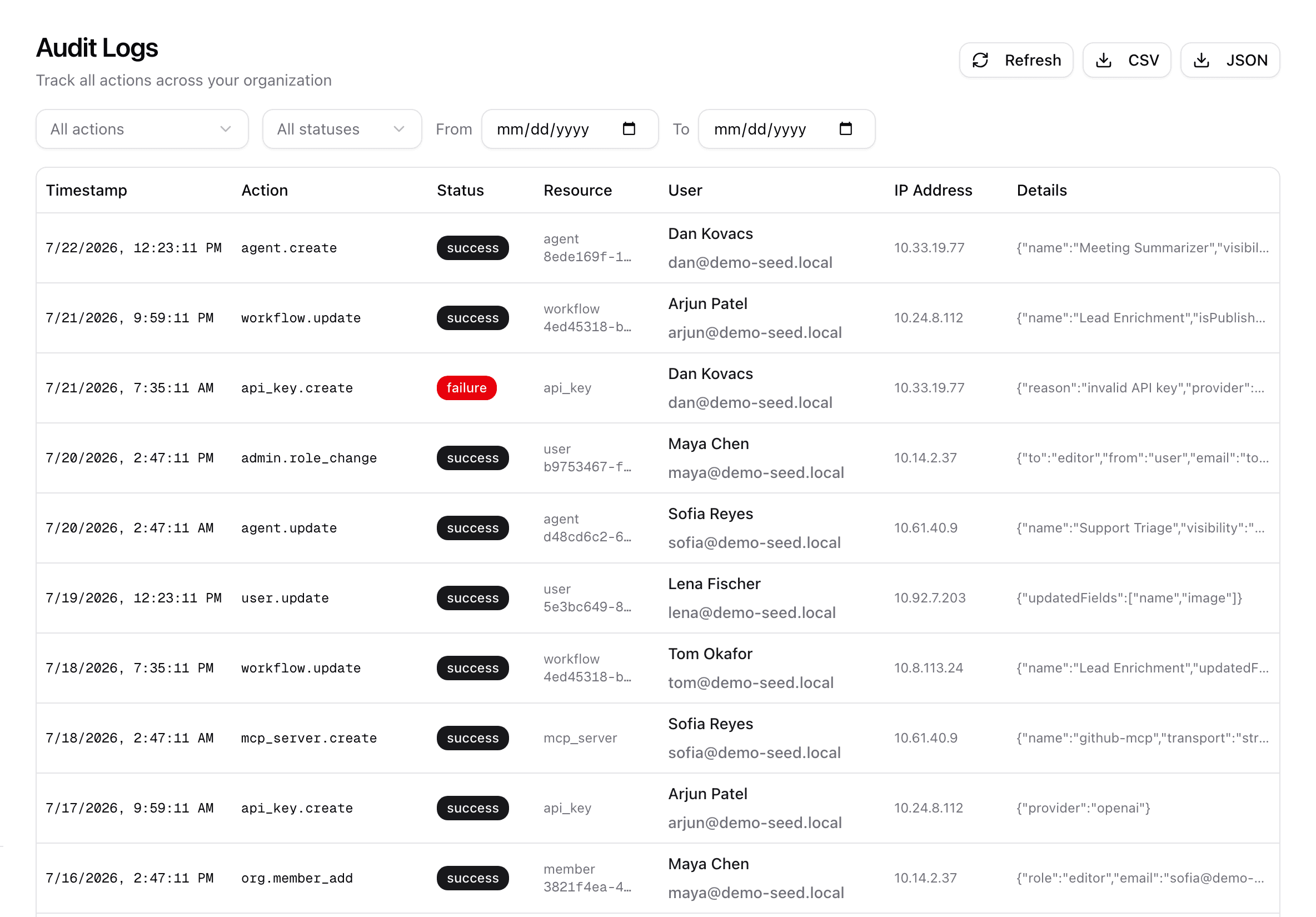
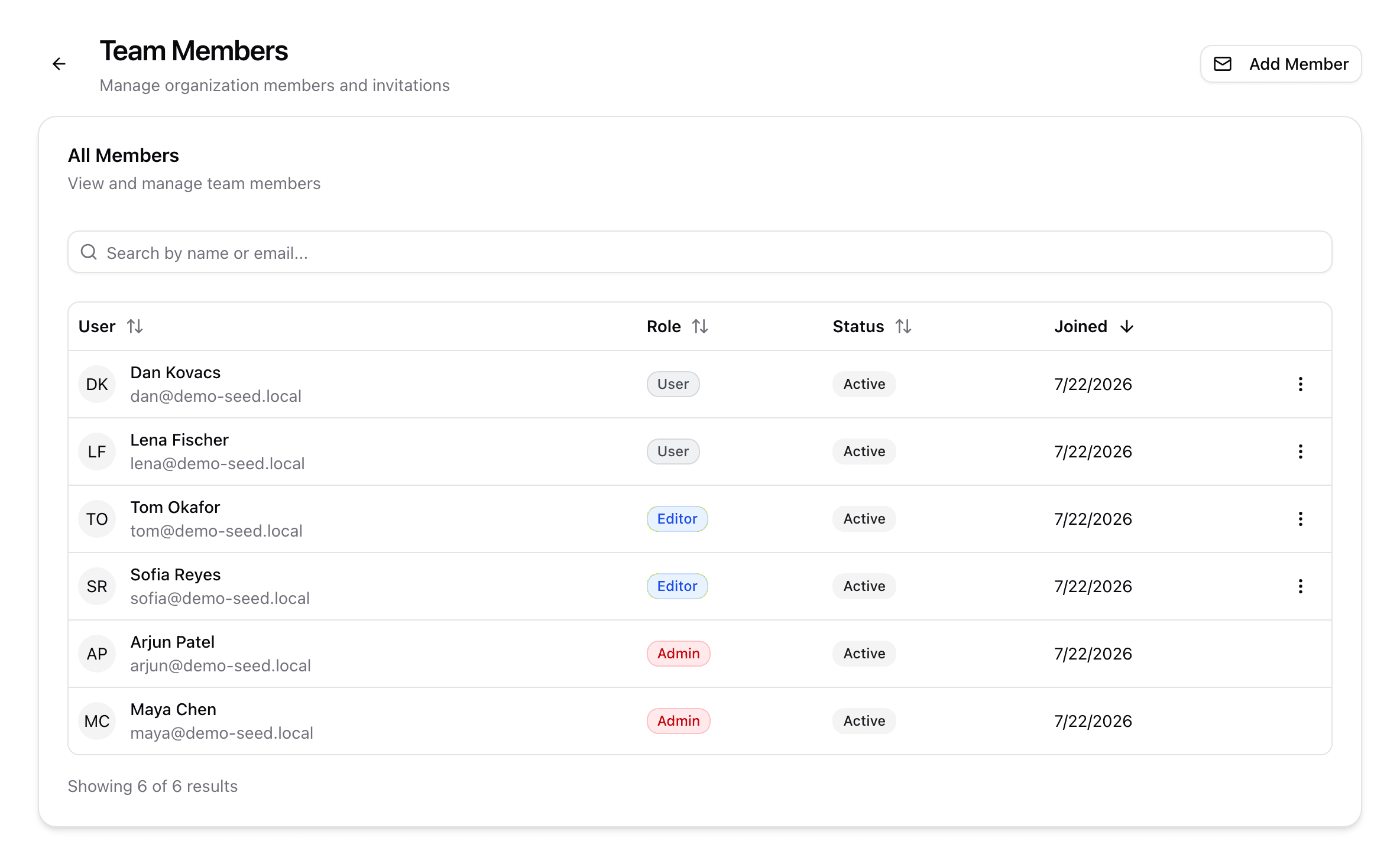
This is where a platform like Wirebase changes the math rather than just undercutting it. Wirebase runs as a managed cloud service on every plan, and on the Enterprise plan it can also be deployed self-hosted in your own infrastructure, on request. Pricing is published per seat with no seat minimum: free for up to 3 members, then $10 per member/month on the Team plan ($8 billed yearly). MFA and the audit log, with CSV and JSON export, are on every plan, whether you're running it for 5 people or 500. OIDC SSO starts on Team. SAML SSO, SCIM provisioning, and the self-hosted deployment sit on the custom-priced Enterprise plan, so Wirebase gates those too. It just doesn't gate them behind a 150-seat floor on its pricing page.
The other half of the trade: instead of one vendor's model bundled into your seat price, org admins add their own API keys — OpenAI, Anthropic, Google, xAI, Groq, Ollama, OpenRouter — and every user in the org can switch models mid-conversation. You pay each provider's actual API rate, with no markup layered on top, and you're never locked into whichever model happens to be that vendor's flagship this quarter.
To be honest about the tradeoff: this isn't zero-effort. On the managed cloud, Wirebase runs the platform, but someone on your team owns the provider relationships — the API accounts, the keys, and the usage bills that arrive from each vendor separately from the seat fee. That's a real cost a single-vendor plan doesn't ask you to pay, because one vendor holds the whole relationship. For a 50-person engineering org that already holds API accounts with two or three model vendors, that's a Tuesday afternoon. For a team that wants exactly one vendor relationship and one invoice, it's a genuine reason to stay on a single-vendor plan. And if the requirement is that the platform itself, and the conversation history it stores, stay inside your own environment, that's the Enterprise self-hosted deployment: Wirebase deploys it into your infrastructure on request, so it's a conversation with sales, not a weekend install.
The Actual Question at 50 Seats
The pricing pages want you asking "which plan is cheapest." The real question is "which parts of governance do I need before I have 150 people, and am I willing to pay a single vendor's enterprise tax to get them early." If the answer is "all of it, now, without buying 100 seats I don't have," a platform that decouples the seat from the model vendor stops being the scrappy option and starts being the practical one.
Try it yourself at wirebase.com.
Sources: